Year: 2026

Terry Samuels: Digital Marketer & Keynote Speaker | Salterra Digital Services

Terry Samuels: The Digital Marketing Speaker Who Skips the Fluff

Most marketing keynotes follow a script you’ve heard before. A slick presenter walks on stage, drops some buzzwords, shows a few logos, and leaves you with a notebook full of vague advice you’ll never use.

Terry Samuels doesn’t run that play.

As the co-founder and driving force behind Salterra Digital Services, Terry built his reputation by doing the work first and speaking about it second. That sequence matters. Every framework he teaches, every strategy he outlines in a consulting engagement, comes from real campaigns, real clients, and real results. In 2026, businesses need that kind of grounded, practice-first expertise from a marketing speaker.

If you’re researching Terry Samuels as a keynote speaker for your next corporate event, or considering him as a marketing consultant for your organization, this guide answers every question you’re likely to have.
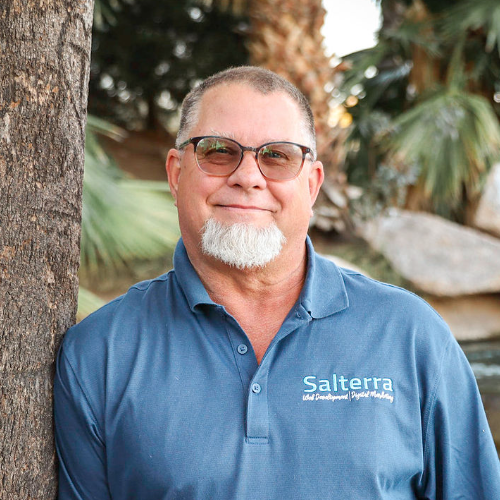
Terry Samuels, digital marketing keynote speaker with Salterra Digital Services, presenting marketing strategy to a corporate audience, contact us to book your next event.

Who Is Terry Samuels?

Terry Samuels is a digital marketer, keynote speaker, and co-founder of Salterra Digital Services, a full-service digital marketing agency serving clients nationwide. His work sits at the intersection of search engine optimization, brand strategy, and business development.

His Background in Digital Marketing

Terry’s expertise spans SEO, content strategy, local search, and digital advertising. He brings a practitioner’s lens to everything he teaches. Rather than presenting marketing as a theoretical discipline, he focuses on the mechanics: what you actually do, and in what order, to move the needle on what matters to your business.

His agency, Salterra Digital Services, works with businesses across multiple industries. That breadth of client experience feeds directly into his speaking and consulting content. When he talks about what works in a competitive search landscape, he draws on active campaigns, not textbooks.

Industries He Serves as a Marketing Consultant

Terry’s consulting work is not locked to a single vertical. He has worked with businesses in professional services, healthcare-adjacent industries, home services, e-commerce, and local brick-and-mortar operations. His approach adapts to each industry’s specifics while applying consistent frameworks for search visibility, lead generation, and customer acquisition.

For corporate event organizers, that flexibility means his keynotes resonate with mixed audiences. He doesn’t rely on niche jargon that resonates only with one segment of the room.

What Terry Samuels Speaks About

Terry’s keynotes and workshops cover immediately applicable topics. Attendees leave with specific action items, not a vague sense of inspiration.

Core Speaking Topics

His most-requested presentations focus on:

  • How search engines actually rank content in 2026, and what that means for your content strategy
  • Building a digital presence that generates inbound leads rather than just traffic
  • Local SEO fundamentals for businesses competing in specific geographic markets
  • The relationship between brand authority and search visibility
  • Common marketing mistakes that drain budget without producing measurable outcomes

Each session focuses on a clear problem, a concrete framework, and actionable steps the audience can take before their next workday.

How He Compares to Other Marketing Keynote Speakers

A fair question to ask before booking any speaker is: why this person over someone else? The marketing speaker market is crowded. Many presenters are strong communicators but thin on operational depth. Others are technically strong but lose non-technical audiences within ten minutes.

Terry occupies a practical middle ground. He can explain technical concepts like schema markup, crawl budget, or keyword intent in plain language without losing accuracy. That balance makes him a strong fit for events with audiences that include both marketing professionals and business owners who aren’t digital natives.

He’s not a celebrity speaker with a bestselling book and a pre-packaged talk. He’s a working practitioner who speaks, so his material is current and grounded in what’s happening in the market right now.

What a Consulting Engagement Looks Like

Topics Covered in Marketing Consulting

When organizations bring Terry Samuels in for a consulting engagement rather than a one-time keynote, the scope expands. A typical engagement might address:

  • Audit of current digital presence and search visibility
  • Competitive landscape analysis for the client’s specific market
  • SEO and content strategy development
  • Guidance on paid search and digital advertising structure
  • Brand positioning and messaging clarity

The depth of each area depends on the client’s goals, team size, and existing marketing infrastructure.

How Long Before You See Results?

This is a question worth asking any marketing consultant honestly. Organic search results, often a core part of Terry’s consulting work, typically take three to six months to show meaningful movement in rankings and traffic. Paid campaigns can deliver results faster, sometimes within weeks, but sustainable growth in organic visibility takes longer.

Terry’s approach is to set realistic expectations upfront. If a consultant promises page-one rankings in 30 days without knowing your competitive landscape, that’s a red flag. The honest answer is that the timeline depends on your current domain authority, how competitive your target keywords are, and how consistently you execute the strategy.

Is It Worth It for Small and Mid-Size Businesses?

The ROI question is real, and it deserves a direct answer. Marketing consulting pays off when two conditions are met: the strategy is sound, and the business can execute it.

For small and mid-size businesses, working with a consultant like Terry often pays off by helping you avoid costly mistakes. A business that spends six months building out a content strategy targeting the wrong keywords, or that runs paid ads without proper conversion tracking, wastes far more than a consulting fee. Getting the foundation right from the start compresses the timeline to results.

That said, consulting is not a magic switch. The best outcomes come from businesses that engage as active partners, implement recommendations consistently, and measure performance over a realistic timeline.

The Risk of Hiring a Marketing Consultant Without Proven Results

Any honest discussion about hiring a marketing speaker or consultant must include this: the market has plenty of people who talk well about marketing but lack a track record of delivering for real businesses.

Ask these questions before signing any agreement:

  1. Can you show examples of work done for businesses in my industry or market?
  2. What metrics do you use to measure success, and how do you report on them?
  3. What does a realistic outcome look like for my specific situation in six months?
  4. Who will actually be doing the work, and what is their experience level?

A consultant who can’t answer those questions clearly is one to approach with caution.

How to Book Terry Samuels

Booking Terry for a speaking engagement or consulting project starts with a direct conversation. Every event and consulting engagement has different requirements: audience size, topic focus, duration, budget, and expected outcomes all shape what the right arrangement looks like.

The best starting point is to reach out through Salterra Digital Services at salterrasite.com. From there, you can outline your goals, and the team will get back to you quickly to discuss fit, availability, and logistics.

Don’t book a speaker or consultant without having that initial conversation. The details matter, and a good consultant will tell you honestly whether there’s a fit before you sign any agreement.

FAQs About Terry Samuels

Who is Terry Samuels and what does he speak about?

Terry Samuels is the co-founder of Salterra Digital Services and a keynote speaker focused on digital marketing strategy. His talks cover SEO, content marketing, brand visibility, and lead generation. He brings a practitioner’s perspective to every presentation, drawing on active client work rather than theoretical frameworks.

What industries does Terry Samuels specialize in as a marketing consultant?

Terry has worked with businesses across professional services, home services, healthcare-adjacent markets, e-commerce, and local brick-and-mortar operations. His frameworks adapt across industries, making him a strong fit for corporate events with mixed audiences and consulting engagements across sectors.

How much does it cost to hire Terry Samuels as a keynote speaker?

Specific pricing isn’t listed publicly, as speaker fees depend on event format, duration, travel, and customization needs. The right step is to reach out directly through salterrasite.com to discuss your event and get accurate information about what an engagement would look like for your situation.

What do clients say about Terry Samuels and the results he delivers?

Client feedback on Terry’s work through Salterra Digital Services reflects his focus on practical, actionable strategy. Clients consistently note that his recommendations are grounded in real market data and that he communicates complex digital concepts in terms that non-technical teams can act on. You can request specific reviews and case studies by contacting Salterra directly.

How does Terry Samuels compare to other marketing keynote speakers?

While many marketing speakers focus on inspiration or high-level trends, Terry’s sessions focus on specific, executable steps. He explains technical topics like search algorithms and content structure in plain language without losing accuracy. That combination suits audiences that include both marketing professionals and business owners who need clarity, not complexity.

How long does a Terry Samuels marketing consulting engagement take to show results?

Organic search improvements typically become visible within three to six months of consistent strategy execution. Paid campaigns can show results faster. Terry sets realistic expectations at the start of any engagement, and the timeline depends on the competitive landscape, current domain authority, and how consistently you implement recommendations.

What are the risks of hiring a marketing consultant with no proven ROI data?

The biggest risk is paying for strategy that never gets executed or for tactics that don’t match your actual business situation. Before hiring any consultant, ask for examples of results in comparable industries, ask how success is measured, and make sure reporting is built into the engagement from day one. A consultant who avoids those questions is a signal to slow down.

Sources

  • Search Engine Optimization, Wikipedia
  • Content Marketing, Wikipedia

Custom Software Development for Business Growth | Salterra Digital Services

Is Your Software Working for You, or Against You?

You pay a monthly subscription for software your team barely uses. Half your workflows live in spreadsheets because the platform you bought doesn’t quite do what you need. You’ve submitted the same feature request for three years. Sound familiar?

This is the reality for thousands of businesses that chose an off-the-shelf solution because it was fast, familiar, or cheap at the time. The problem compounds quietly. Your team builds workarounds. You add more tools to patch the gaps. Your tech stack becomes a maze of subscriptions that don’t talk to each other cleanly, and none of it is yours.

Custom software development solves exactly this problem. It isn’t the right answer for every business, but for companies whose operations have outgrown third-party platforms, a purpose-built solution can change everything.

What Is Custom Software Development?

Custom software development is the process of designing, building, and deploying a software application built specifically for one organization’s needs. Unlike off-the-shelf or SaaS (Software as a Service) products, a custom platform matches your exact workflows, data structures, user roles, and business logic.

Off-the-shelf software is designed for the broadest possible audience. That’s its strength and its weakness. It works “well enough” for most use cases, but it will never fit yours perfectly. Custom software, by contrast, starts with your process and builds outward from there.

The Core Difference: Ownership

With third-party software, you rent access. The vendor owns the code, the roadmap, and the pricing. When they raise prices, change features, or shut down, you scramble. With a custom-built platform, you own the codebase. You control what gets built next, how the system scales, and who has access.

Where Custom Software Fits Best

Custom development delivers the most value when:

  • Your team has unique processes that generic tools can’t replicate
  • You’re paying for multiple overlapping subscriptions to cover one workflow
  • Your data needs to move between systems in ways no vendor supports natively
  • You operate in a regulated industry where vendor compliance gaps create risk

Signs That Third-Party Software Is Holding You Back

Many business owners don’t realize the cost of staying with the wrong tool. The friction is gradual. But clear signals show your current platform has become a ceiling rather than a floor.

You’re Building Workarounds Daily

If your team regularly exports data to a spreadsheet, manually copies information between two platforms, or has a standing process that exists specifically because your software “can’t do that,” you’re paying labor costs to compensate for a software gap. That’s expensive, and usually invisible in your budget reporting.

Licensing Costs Are Climbing Faster Than Your ROI

Per-seat licensing models punish growth. Every new hire adds to your monthly bill, but the software doesn’t get any better. Custom software development by Salterra carries an upfront build cost, but eliminates per-user licensing fees and locks in the feature set you need. For growing teams, the math often tips in favor of custom within two to three years.

Your Vendor’s Roadmap Doesn’t Match Yours

Third-party platforms prioritize features that serve the largest portion of their customer base. Your specific need may sit in their backlog indefinitely. When your ability to serve clients depends on features a vendor hasn’t built yet, you’ve outsourced your strategic capability to someone else’s product team.
Business team reviewing a custom software development dashboard with Salterra Digital Services, contact us today to start your build.

Custom Software vs. Third-Party SaaS: Which One Wins?

This isn’t a binary choice. Many businesses run a hybrid model: custom software handles their proprietary workflows, while established SaaS tools manage commodity functions like email, payroll, or communication.

The real question is: what makes your business different? Protect the processes and data models that set you apart from competitors in software you own. The commodity functions, the stuff every business does the same way, are fine to leave in a SaaS tool.

Low-Code and No-Code as a Middle Ground

Before committing to full custom development, evaluate low-code and no-code platforms. Tools like Bubble, Retool, or Microsoft Power Apps let non-developers build functional applications using visual interfaces. These platforms work well for internal dashboards, simple automation, and lightweight client portals.

The limitation is scalability. As your requirements grow more complex, low-code tools often hit walls. They can also reintroduce the vendor dependency problem you were trying to solve. Think of them as a useful bridge, not a permanent foundation for business-critical operations.

How Much Does Custom Software Development Cost?

This is the first question every business owner asks. The honest answer: it depends on scope, and the range is wide.

A simple internal tool or workflow automation might run from $15,000 to $50,000. A mid-complexity platform with integrations, user authentication, and a custom database typically falls between $50,000 and $200,000. Enterprise-grade systems with advanced reporting, real-time data processing, and multi-tenant architecture can exceed that.

That sounds like a lot until you stack it against what you’re currently spending. Add up your licensing fees, the labor cost of workarounds, and the opportunity cost of features you can’t build, and the calculus shifts.

How Long Does a Custom Build Take?

Timeline depends directly on scope. A focused internal tool can go from discovery to deployment in six to twelve weeks. A full-featured client-facing platform typically takes four to nine months. Enterprise systems with complex integrations often run twelve to eighteen months.

The longest delays usually come from unclear requirements at the start of the project. The more precisely you can describe your current workflow and your desired end state, the faster (and cheaper) the build.

How to Migrate From Third-Party Software Without Disrupting Operations

Switching platforms mid-operation is one of the most stressful things a business can do. But with the right approach, it doesn’t have to grind your team to a halt.

Here’s a practical sequence that reduces risk:

  1. Audit your current workflows before writing a single line of code. Map every process that touches the old platform.
  2. Build in parallel. Run the custom platform alongside the existing tool during testing so your team can compare outputs in real time.
  3. Migrate data in stages. Start with historical data exports, validate integrity, then migrate active records during a low-volume window.
  4. Train before you cut over. Get your team fluent in the new system before you turn off the old one.
  5. Keep a rollback plan. For the first 30 days, maintain access to the old platform in read-only mode.

What to Ask Before Hiring a Software Development Company

Not every development team is the right fit. Before you sign a contract, get clear answers on these points:

  • Who owns the source code when the project is done?
  • What is the handoff process if you want to bring development in-house later?
  • How do they handle scope changes during the project?
  • What does their testing and QA process look like?
  • Can they provide references from clients with similar project complexity?

The answers reveal how a firm balances your long-term interests against its short-term project budget.

To Read More Info about Salterra Digital Services

Integrations: Custom Software Doesn’t Mean Isolated Software

One common misconception: going custom means starting from scratch on everything. That’s not how modern development works.

Custom software can integrate with virtually any third-party tool with an API, including most major SaaS platforms. Your custom platform can pull data from your CRM, push results to your accounting system, trigger notifications in Slack, and sync with your email service provider.

The difference is that your custom system sits at the center of that ecosystem. It defines how data flows rather than being constrained by how someone else built their integration.

FAQ About Salterra Custom Software

What is custom software development, and how does it differ from off-the-shelf software?

Custom software development is the process of building an application specifically for one company’s needs, rather than buying a pre-built product designed for a broad market. Off-the-shelf software is built to serve as many customers as possible, which means it compromises on specificity. A custom solution matches your exact processes, data model, and user roles from day one.

When should a business replace third-party software with a custom-built solution?

The right time is when the cost of staying, in licensing fees, workaround labor, and lost capability, exceeds the cost of building. Common triggers include rising per-seat costs, features your vendor won’t build, compliance gaps the vendor can’t address, or workflows so unique that no existing product covers them.

How much does custom software development cost for a business in 2026?

Costs typically range from $15,000 for simple internal tools to $200,000 or more for complex platforms with multiple integrations and custom reporting. The exact number depends on scope, team size, integration requirements, and timeline. Getting a detailed discovery and scoping phase completed before the build starts is the best way to get an accurate estimate.

What are the risks of relying on third-party software vendors for business-critical operations?

Vendor dependency can disrupt operations through price increases, feature deprecations, data portability restrictions, or the vendor going out of business entirely. If your most important workflow lives in someone else’s platform, you have limited control over its continuity.

How long does it take to build custom software for a mid-sized business?

Most mid-complexity projects take between four and nine months from discovery to deployment. Simpler tools can be completed in six to twelve weeks. The biggest variable is how clearly you define requirements at the start; unclear specs extend timelines and increase costs.

Can custom software connect with the third-party tools I already use?

Yes. Modern custom development relies heavily on APIs to connect with existing platforms. Your custom software can integrate with CRMs, accounting systems, communication tools, payment processors, and most other SaaS applications. The goal is usually to make the custom platform the hub that orchestrates data across your existing tools.

Are low-code or no-code platforms a good alternative to full custom development?

For simple automation or lightweight internal dashboards, low-code tools like Retool or Bubble can be a practical starting point. They reduce cost and build time. The trade-off is that they reintroduce vendor dependency and hit scalability limits as requirements grow. For business-critical or complex systems, full custom development typically offers better long-term outcomes.

Sources

  1. Custom vs. off-the-shelf software overview, Wikipedia, “Bespoke software”: https://en.wikipedia.org/wiki/Bespoke_software
  2. Low-code development platforms overview, Wikipedia, “Low-code development platform”: https://en.wikipedia.org/wiki/Low-code_development_platform
  3. Software as a Service definition and market context, Wikipedia, “Software as a service”: https://en.wikipedia.org/wiki/Software_as_a_service
  4. API (Application Programming Interface), Wikipedia: https://en.wikipedia.org/wiki/API

Scottsdale SEO Company for Local Business Growth | Salterra Digital Services

Scottsdale SEO Company: What Most Businesses Get Wrong Before Hiring One

Your competitor is outranking you on Google right now. They’re not smarter. They might not even be better at what they do. But they’re getting found first, and in Scottsdale’s competitive market, that matters more than you think.

Most Valley businesses hire an SEO company after one of two things happens: they’ve tried running ads and watched their budget disappear, or they’ve watched a newer competitor shoot past them in search results seemingly overnight. By the time they reach out, they’ve already lost months of organic visibility. This guide is for businesses that want to stop that from happening.

What a Scottsdale SEO Company Actually Does for Local Businesses

Search engine optimization is not magic. It’s a set of repeatable, technical, content-driven strategies that signal to Google why your business deserves to rank for the searches your customers make.

A Scottsdale SEO company handles several core functions for local businesses.

Technical SEO: The Foundation Everything Else Rests On

Before your content can rank, Google needs to crawl and index your site without errors. Technical SEO covers page speed, mobile usability, site architecture, crawl budget, structured data, and Core Web Vitals. If your site takes 5 seconds to load on mobile, you’ve already lost a significant percentage of potential visitors before they read a word.

Local SEO: Winning the Map Pack and Nearby Searches

For most Scottsdale businesses, the Google Map Pack drives most of the revenue. Local SEO means optimizing your Google Business Profile, building consistent NAP citations across directories, earning local backlinks, and producing location-relevant content. A searcher who types “best accountant near Scottsdale AZ” is ready to hire. Your job is to be the business that shows up.
Scottsdale SEO company team at Salterra Digital Services reviewing local business SEO strategy, contact us today for a free consultation

Content and On-Page SEO

Google rewards pages that fully answer a searcher’s question. On-page SEO means structuring your pages with proper headings, internal linking, keyword placement, meta tags, and content depth that matches search intent. In 2026, thin content simply does not compete.

How Much Does SEO Cost in Scottsdale, AZ?

Pricing varies widely, but here’s an honest breakdown of what the market looks like.

Most reputable Scottsdale SEO agencies charge $750 to $3,500 per month for small- to mid-sized businesses. One-time local SEO audits run from $500 to $1,500. Project-based work (like a site migration or a link-building campaign) can range from $2,000 to $10,000 depending on scope.

Be cautious of agencies charging $99 a month for “full SEO.” That price point cannot cover the labor required to produce meaningful results. You’re either paying for automated reports or nothing at all.

The ROI case for SEO is straightforward. A single page ranking on page one for a high-intent keyword can drive hundreds of qualified visits per month, indefinitely, without paying per click.

Scottsdale SEO Agency vs. Hiring an In-House SEO Specialist

This is one of the most common questions growing businesses ask, and the honest answer depends on your budget and stage of growth.

An experienced in-house SEO specialist in the Phoenix metro area typically earns $65,000 to $90,000 annually, plus benefits. That person can focus fully on your brand, but they’re one person with one skill set. They can’t replace a copywriter, a developer, a link builder, and a data analyst.

A Scottsdale SEO agency gives you a full team for a fraction of that cost. The tradeoff is that your account shares attention across other clients. The best agencies solve this with dedicated account managers and clear deliverable agreements.

For most businesses under $5M in annual revenue, an agency delivers more capability per dollar spent.

How Long Does SEO Take to Show Results for a Scottsdale Business?

You should see early technical improvements within 30 to 60 days: faster load times, fewer crawl errors, better Google Business Profile engagement. Keyword movement typically begins between months 2 and 4. Meaningful ranking and traffic gains for competitive terms usually materialize between months 4 and 9.

SEO is not a paid channel you can pause and restart. It builds compound interest over time. A business that starts today and stays consistent for 12 months will have a structural advantage over competitors who delayed.

How to Choose the Right SEO Company in Scottsdale

Here’s a practical checklist when you’re evaluating agencies.

  • Ask for references from current clients in similar industries
  • Request a sample of a real monthly report (not a template)
  • Ask which specific KPIs they track and how they tie to revenue
  • Confirm they do NOT use private blog networks or purchased links
  • Get clarity on who actually does the work (in-house or outsourced)
  • Ask what happens to your content and links if you cancel

Any agency that guarantees a specific ranking within a specific time frame is selling you something it cannot deliver. Google’s algorithm is not under their control, and no ethical SEO company will claim otherwise.

Local SEO vs. National SEO: Which Does a Scottsdale Business Need?

Most Scottsdale businesses need local SEO first. If your customers are in or around Scottsdale, prioritize ranking for geo-modified searches, map pack visibility, and local content relevance.

National SEO makes sense when your product or service ships or scales beyond the region, when you’re competing for informational keyword traffic, or when building brand authority at a broader level. Many businesses eventually need both, but local SEO almost always delivers faster ROI for a service-area business.

Red Flags When Hiring an SEO Agency in Scottsdale

Watch out for these warning signs before you sign anything.

  • Vague deliverables with no defined scope of work
  • No explanation of their link-building strategy
  • Promises of page one rankings in 30 days
  • Zero transparency about the tools or platforms they use
  • Reports filled with vanity metrics like “impressions” but no ranking or traffic data
  • Lock-in contracts with no performance benchmarks

Bad SEO can actively hurt your site. Google penalizes sites that build spammy backlinks or use manipulative tactics. Recovering from a manual penalty can take months and costs far more than good SEO ever would.

Is SEO Worth It for Small Businesses in Scottsdale?

Yes, with one condition: you have to commit long enough for it to work.

Salterra SEO is the only digital marketing channel that builds an asset you own. Paid ads stop the moment you stop paying. Social media reach depends on algorithms you don’t control. Organic search traffic compounds. A well-optimized page can drive qualified leads for years.

For a Scottsdale small business competing in a specific service area, even a modest local SEO investment often outperforms paid ads on cost per lead within 6 to 12 months.

Alternatives like Google Ads and social media marketing serve important roles. Ads are excellent for immediate traffic and testing offers. Social media builds brand awareness. But if you want sustainable, scalable inbound growth without constant ad spend, SEO delivers.

FAQ About Scottsdale SEO by Salterra

What does a Scottsdale SEO company actually do for my business?

A Scottsdale SEO company audits your website, fixes technical issues, optimizes your Google Business Profile, builds relevant backlinks, and creates content that matches what your customers are searching for. The goal is to increase your organic visibility so qualified local buyers find you before they find a competitor.

How much does SEO cost in Scottsdale, AZ?

Monthly retainers for local SEO in Scottsdale typically range from $750 to $3,500 depending on competition level, the number of services you’re optimizing for, and the agency’s scope of work. One-time audits start around $500. Beware of ultra-low-cost packages that automate everything and deliver nothing.

How long does SEO take to show results for a Scottsdale business?

Site health and local visibility can improve within 30 to 60 days. Ranking movement typically begins between months 2 and 4. Significant, sustained traffic growth for competitive terms usually requires 6 to 9 months of consistent work.

What questions should I ask a Scottsdale SEO company before signing a contract?

Ask about their link-building strategy, who does the actual work, what KPIs they track, how they define success, and what you retain if you cancel. Ask for references from current clients and a sample real report. Any evasiveness on these questions is a red flag.

What are the red flags of a bad SEO agency in Scottsdale?

Guaranteed rankings, vague deliverables, locked-in contracts with no benchmarks, and reports that show impressions but no traffic or ranking data are all warning signs. Agencies that rely on purchased links or private blog networks can trigger Google penalties that damage your site for months.

Is SEO worth it for small businesses in Scottsdale?

Yes. Local SEO delivers one of the highest long-term ROI rates of any digital marketing channel for service-area businesses. Unlike paid ads, organic rankings build over time and continue driving traffic without ongoing spend. Most small businesses see a positive return within 6 to 12 months of consistent SEO investment.

Should I hire a Scottsdale SEO agency or an in-house SEO specialist?

For most businesses under $5M in annual revenue, a Scottsdale SEO agency offers more capability per dollar. An in-house specialist earns $65,000 to $90,000 per year and typically covers one discipline. An agency brings a full team including content writers, developers, and link-building specialists for a fraction of that cost.

Sources

  1. Google Core Web Vitals and page experience signals, Google Search Central: https://developers.google.com/search/docs/appearance/core-web-vitals
  2. Google Business Profile optimization for local search, Google Business Help: https://support.google.com/business/answer/7091
  3. How Google Search works (crawling, indexing, ranking), Google Search Central: https://developers.google.com/search/docs/fundamentals/how-search-works
  4. Google’s guidelines on link schemes and manual penalties, Google Search Central: https://developers.google.com/search/docs/essentials/spam-policies#link-spam
  5. Search engine optimization overview, Wikipedia: https://en.wikipedia.org/wiki/Search_engine_optimization